This reflection written by Bekah Schrag, a 2016 participant in the Sustainability Leadership Semester (SLS), is one testament of many that illustrates how the SLS inspires students to bring human communities and the environment together.

This reflection written by Bekah Schrag, a 2016 participant in the Sustainability Leadership Semester (SLS), is one testament of many that illustrates how the SLS inspires students to bring human communities and the environment together.

“I have taken multiple leadership courses in hopes of becoming an entrepreneur. I knew most of the technical framework about being a leader, such as how to delegate responsibility, run numbers and how to be an example for others. However, I did not know what being a good leader looked like outside the business world before coming to Merry Lea."

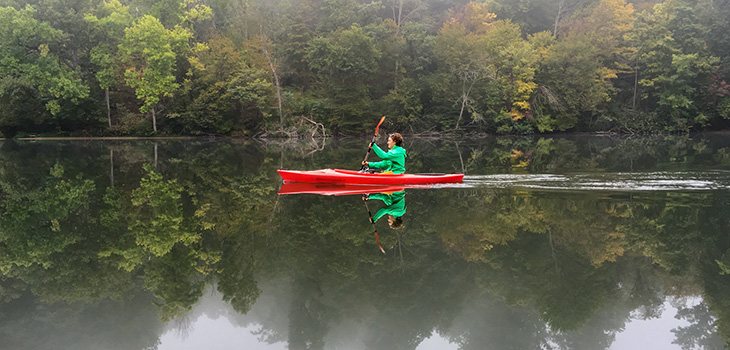
“I am always taken back to the canoe trip when we stood in the center of the river and it was really hard, then we let the water move us and it was really easy. We need to remember that when thinking about controlling the environment.” (9.21.15)

“Water, and the experience of it, forms…the backbone of Goshen College’s Sustainability Leadership Semester (SLS)…each fall,” wrote Jonathon Schramm, associate professor of sustainability and environmental education.

For his whole life, Joel Pontius has cultivated a deep curiosity with the environment. Now, with extensive experience in teaching and writing about sustainability education, Pontius has the opportunity to shape leading-edge publications for international audiences in the fields of environmental and science education.
This summer issue of The Merry Leaflet features the agroecology students and their culminating celebration with a farm to table dinner. Learn about the projects our student researchers conducted this summer and the legacy of Mary Linton upon Merry Lea.

If you start your hike at the Learning Center and go straight on the gravel road toward the Onion Bottom wetland, you’ll pass through the Holy Cow Swamp. This isn’t an official name of course, but the story of Mary Linton yelling “Holy cow!” as she unexpectedly plunged in its depths gets retold at Merry Lea every so often.

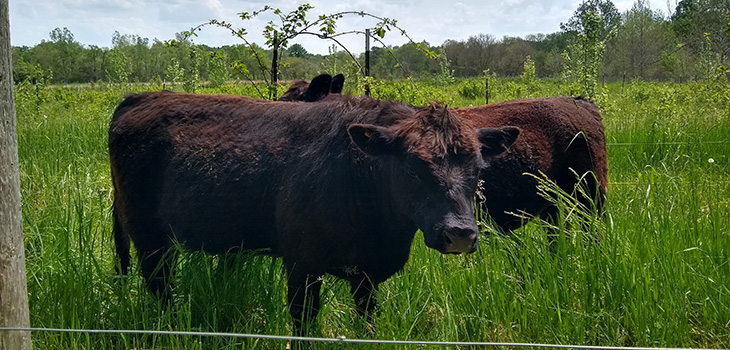
Professors Jonathon Schramm, Ryan Sensenig, and John Mischler and undergraduate students are conducting research over several years that compares the impacts of different prairie management practices: burning and grazing.

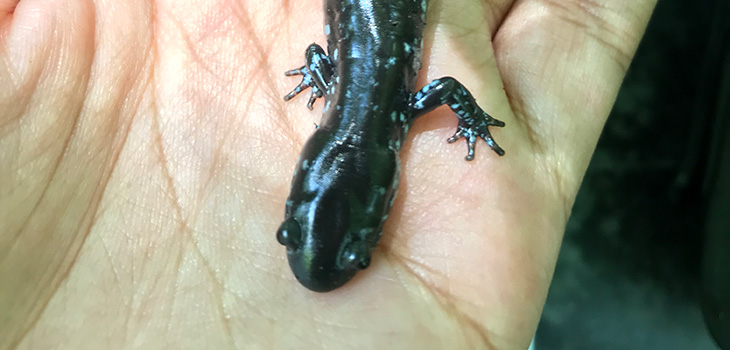
“Just because you see different types of salamanders, doesn’t necessarily mean [those populations are] diverse.” Laura is studying which locations on Merry Lea’s property have genetically diverse populations of salamanders and why.

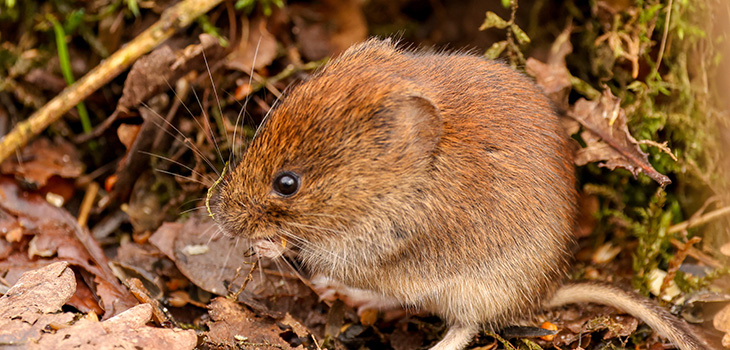
Tasha studied the population dynamics and habitat use of small mammals, specifically northern short-tailed shrews, mice and meadow voles. Because very little research has been done on northern short-tailed shrews, Tasha focused primarily on this species to better understand their preferred habitats.